How One Sideline Game Sparked a Whole New Chapter
I never set out to become a sideline photographer. But somewhere along the way, that’s how a lot of people started seeing me, and honestly, that’s never been the full picture. From the beginning, my real passion has been sports portraits. Powerful, dramatic images that go beyond the game. I started shooting football not just to catch the action, but to open doors, to connect with athletes, coaches, and families, and to create portraits that told their stories.
It all started in September of 2023 when I reached out to Plain Dealing High School. I set up a meeting with the head coach, and he invited me to come shoot their upcoming homecoming game. While looking through the school’s Facebook page, I noticed they were trying to raise money for a new basketball scoreboard. That gave me an idea.
I offered $75 photo sessions to any students, athletes, cheerleaders, dancers, band members, even seniors, donating 100% of the proceeds to the scoreboard fund. At that point in my journey, I needed subjects more than I needed money. I was trying to build a portfolio, and I truly believed it was a win win for everyone involved.
But nobody signed up. Not a single person. It stung. I felt like I was offering something valuable, something meaningful, for very little cost and a good cause. It was hard to understand why it didn’t connect.
Still, I showed up to that game.
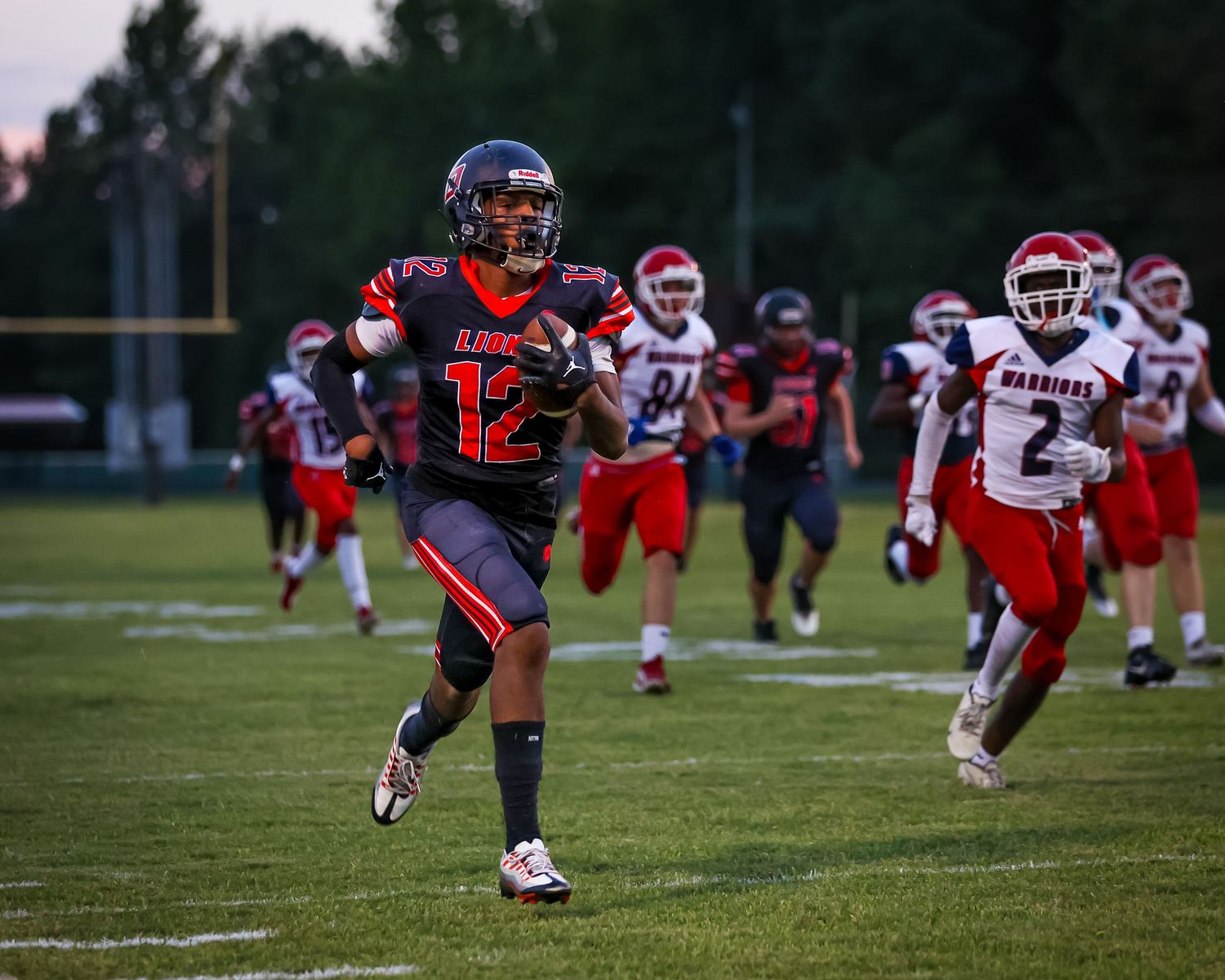
And I’m glad I did. That night, the stands were packed. Being homecoming, the atmosphere was electric, standing room only in the stadium, and even outside the fence, the sidelines were lined with people. The entire community turned out to support the team. That part was beautiful. Sadly, the team lost, but I was there to capture a moment that meant everything to them. A young player named Tyrese Kimble scored what I believe was their first touchdown of the season. By luck or fate, he ran it in right in front of me, and I caught every frame.
Plain Dealing’s team was small. They had only 18 to 21 players dressed out, and from what I was told, they had to open up the roster to 7th and 8th graders just to fill it. It was a tough situation, but that night reminded me why I was doing this, real kids, real effort, real moments that mattered to someone.
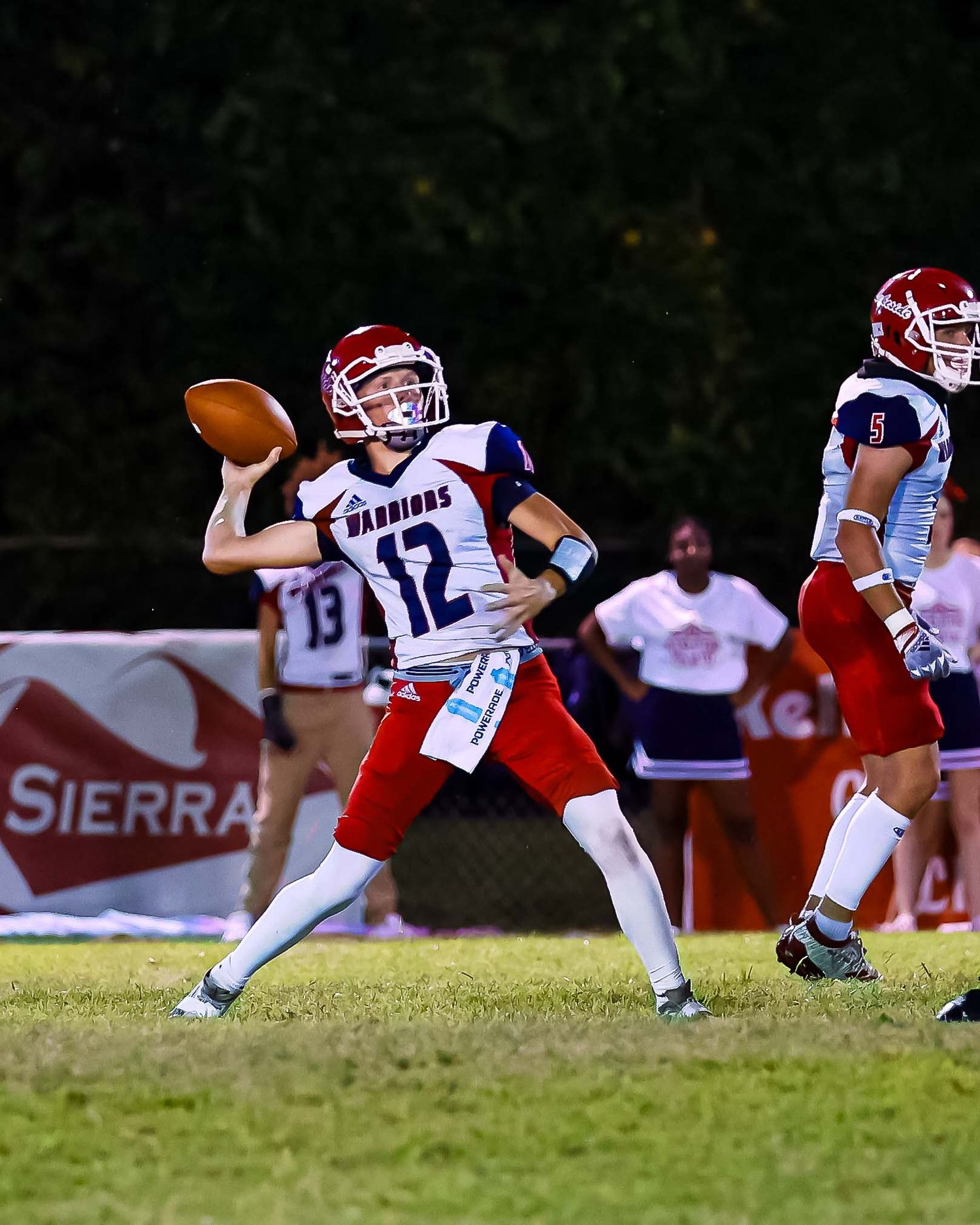
Even though the fundraiser didn’t take off, that game gave me something else. Lakeside was the visiting team, and during the action, I managed to grab some solid shots of their quarterback, number 12. At halftime, I made my way over to the visitors’ stands and showed one of the cheerleaders the back of my camera. I asked if she knew who number 12 was, and she lit up instantly, eyes wide, voice dreamy, and said, “Ohhh, that’s Broooockkkkk,” like something out of a teen movie. Then she smiled and said she knew his family and walked me right over to introduce us.
I showed them the shots on the back of my camera, and their reaction said it all, they loved them. I handed them a business card and told them to reach out if they wanted the images.
“That was my introduction to the Case family,
one of the first real connections that came out of sideline work.”
They contacted me later and invited me to come to their homecoming game the very next Friday, to photograph their team and their sons. I agreed, of course. Since then, the Case family has stayed connected, and I’ve had the privilege of photographing a lot for them over the years. From senior portraits to baseball and football sideline coverage, and even custom sports portraits. We’ve built an ongoing relationship around trust, shared experiences, and some great images. It all started with a single game, and one proud cheerleader pointing me toward her quarterback.
But as luck would have it, I got even more out of that week.
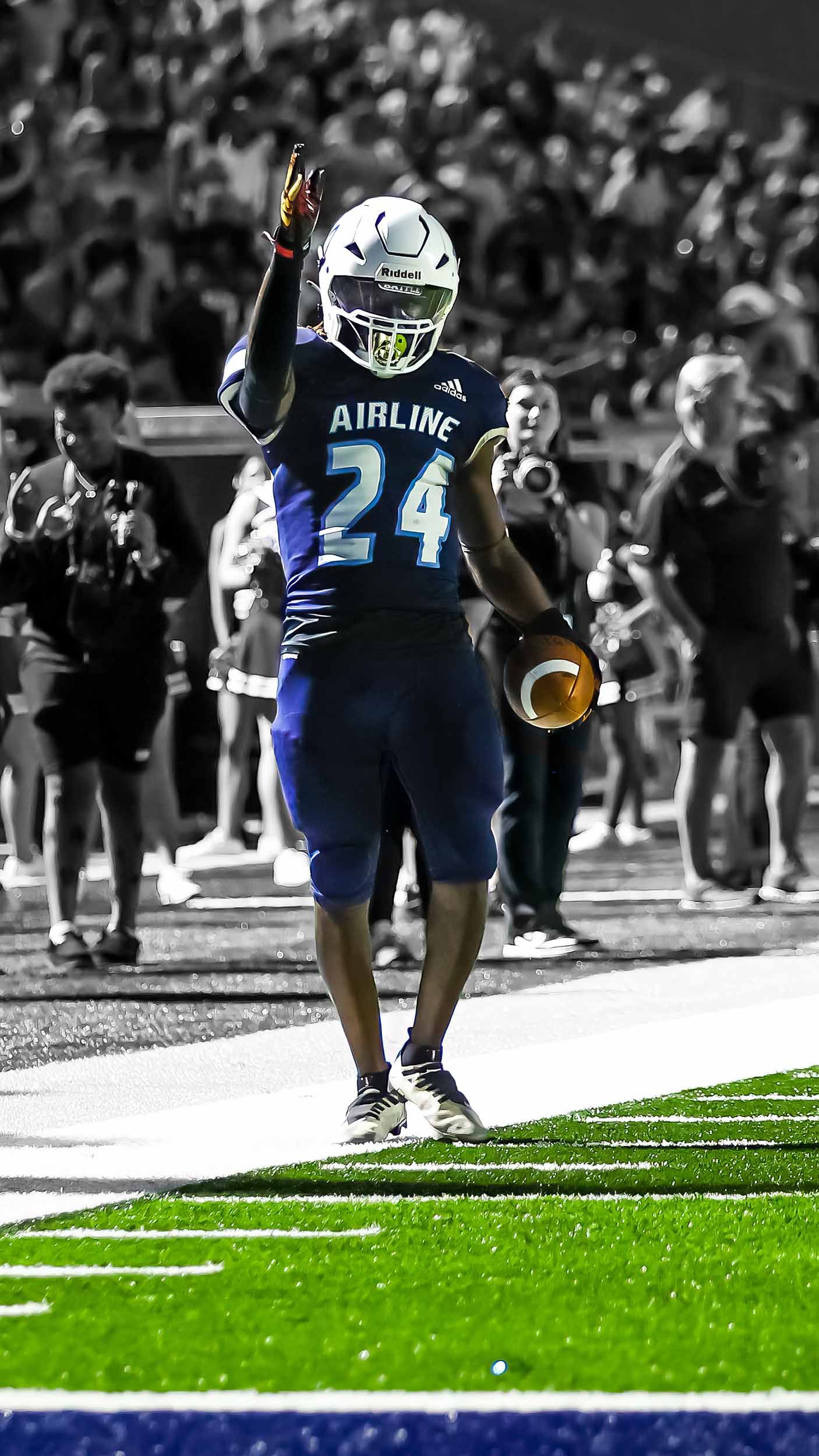
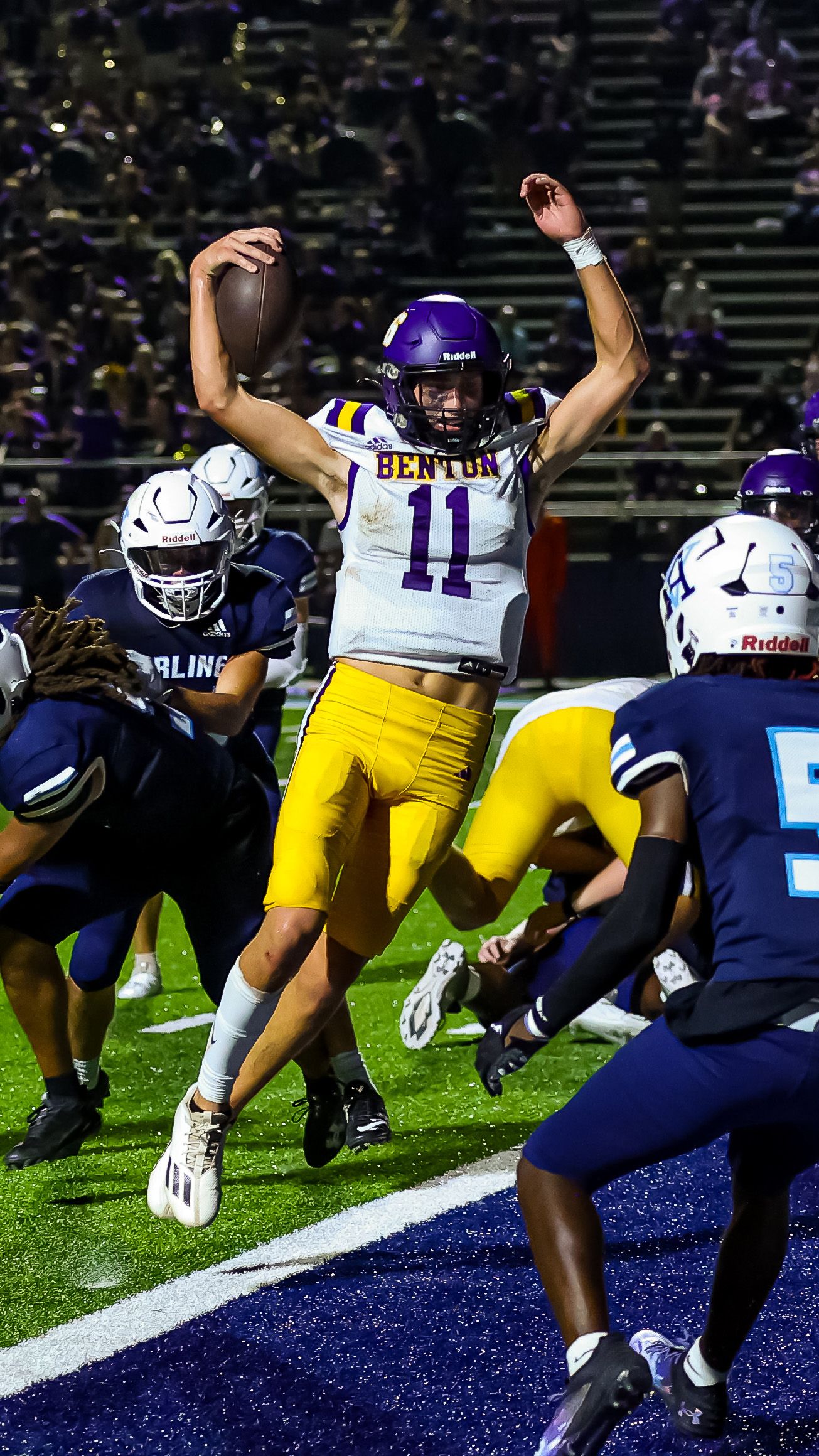
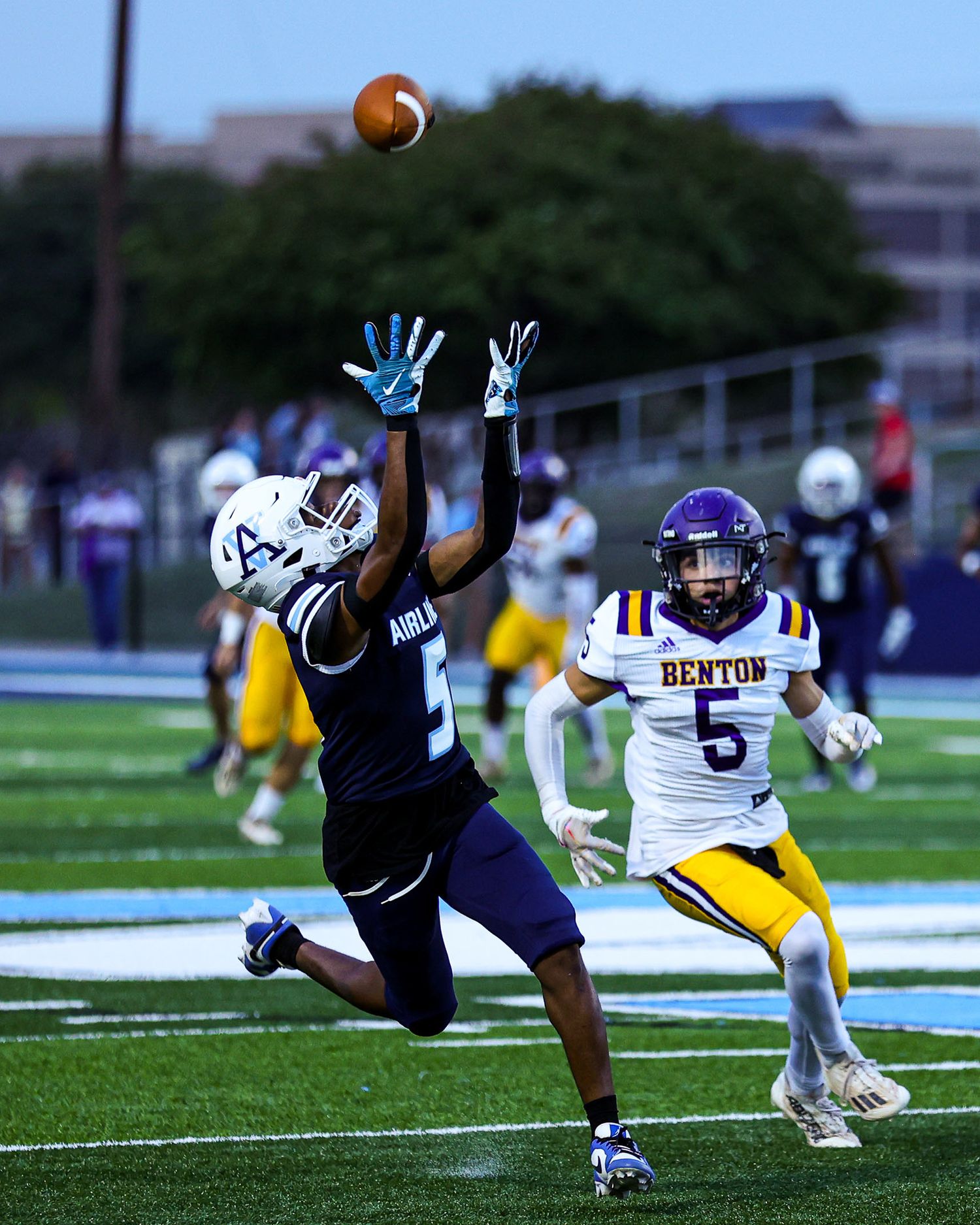
The day before Lakeside’s game, Airline High School and Benton High School were playing at Airline, on a Thursday night, which is rare for high school football. But it worked out perfectly for me. I was able to shoot three football games in just seven days, and I walked away with some of the best images I’d captured up to that point.
I learned a lot from those first few football games. Each sideline shoot taught me something, about camera settings, about light, and about what works in the moment and what doesn’t, JPEG vs. RAW. One of the biggest lessons was discovering how important the anti-flicker setting is when shooting under stadium lights. To the human eye, those lights look steady, but at the high shutter speeds needed to freeze sports action, the camera can absolutely pick up on their flickering. That flicker can cause strange color banding across your images, something I started noticing early on. Once I figured out how and why anti-flicker works, it completely changed the consistency of my shots. It’s just one example of how those first few games became my classroom, and the field became my teacher.
Since then, my gear has grown along with my experience. I started out with a Canon 70–200mm f/2.8L lens, and I still use it today. That lens now lives on one of my two Canon R6 bodies. The second R6 is paired with my Sigma 120–300mm f/2.8, which gives me incredible range and flexibility on the field. I also shoot with a Canon R7, typically paired with a 24–70mm f/2.8 for closer sideline work and wider storytelling shots.
All three cameras, and all three lenses, are still part of my active setup.
But none of that equipment matters more than the reason I started this in the first place. It wasn’t about being on the sidelines. It was about building connections, capturing moments, and telling stories, one photo at a time.
Follow me on Instagram


